
A mobile home roof replacement typically runs $3 to $8 per square foot, with total project costs ranging from roughly $1,500 for a simple single-wide roof-over to $16,000 for a full tear-off on a large double-wide or triple-wide unit. The price depends less on the label “mobile home” than on the roof's condition, access, construction, and the system you install.
You're probably looking at a ceiling stain that started as a faint tan ring and has now spread after another East Texas storm. Online searches produce numbers that seem unrelated, and both may be accurate. A quick roof-over on a sound single-wide can stay near the low end, while a large unit with soft decking, difficult access, several old layers, and complicated flashing can move toward the top.
I've seen homeowners focus on the material price and overlook the labor hiding underneath it. That's where many disappointing quotes begin. This guide focuses on the roof replacement cost for mobile home projects, including the cost drivers contractors must account for before they can give you a defensible number.
Table of Contents
- Why Mobile Home Roof Replacement Costs Vary So Much
- Repair, Coat, Roof-Over, or Full Replacement
- Material Costs and Performance by Roofing Type
- Hidden Cost Drivers That Change Your Quote
- How to Choose the Right Roofing Contractor
- Life-Cycle Cost and Long-Term Value
- Your Pre-Project Checklist and Next Steps
Why Mobile Home Roof Replacement Costs Vary So Much
A homeowner with a leaking single-wide usually wants one answer: what will it cost to stop the leak? The broad answer is about $3 to $8 per square foot, with total projects commonly ranging from roughly $1,500 to $16,000, according to mobile home roof replacement pricing guidance. Those figures cover very different jobs, so treating the range as one standard price will lead you astray.
A simple roof-over on a smaller home may require limited preparation, fewer seams, and little disposal. A full replacement on a double-wide or triple-wide involves more roof surface, more labor, and more detail at the center marriage line, roof edges, vents, and other penetrations. The roof area doesn't always grow in a neat, predictable way as the home gets wider, and larger surfaces increase tear-off, hauling, fastening, and sealant work.
What pushes a project toward the low end
The low end generally belongs to a sound existing roof, straightforward access, and an overlay or coating system. A contractor may avoid tear-off disposal and install a new compatible surface without opening the entire assembly. That approach only makes sense when the substrate isn't soft, sagging, or saturated.
Single-wide homes with open access and uncomplicated roof geometry are usually easier to stage. A clear driveway, nearby material drop zone, and no obstruction around the perimeter can reduce handling time. Those savings won't erase the cost of quality materials, but they can keep the estimate from climbing unnecessarily.
Why larger or damaged homes cost more
Double-wide and triple-wide homes bring more than extra square footage. Crews may spend longer moving materials, removing old roofing, sealing seams, and detailing transitions. If the roof has several existing layers, the disposal load grows, and if water has reached the decking or framing, the contractor must repair the structure before installing a waterproof surface.
Practical rule: A low quote is only useful if it clearly states what the contractor will remove, repair, install, and warranty.
Mobile home work also differs from ordinary site-built roofing. Lightweight framing, low-slope drainage, transport-related setup, and tie-down access can affect installation decisions. Before comparing bids, ask whether each contractor priced the same scope. If one estimate includes a tear-off and the other assumes a roof-over, the totals aren't comparable. For homeowners dealing with storm damage or an insurance claim, guidance on getting fair roof replacement settlements can also help clarify what documentation belongs in the process.
Repair, Coat, Roof-Over, or Full Replacement
A leak in a mobile home does not automatically call for a new roof. First identify whether the failure is isolated, whether the roof surface and decking remain sound, and how long you plan to keep the home. Those answers point to one of four paths: spot repair, coating, roof-over, or full replacement. I would not recommend tearing off a serviceable roof just because a complete replacement carries a larger price tag.

Spot repair
Spot repair suits a localized failure, such as damaged flashing, a loose fastener, a small membrane puncture, or a failed vent seal. It will not correct widespread cracking, repeated ponding, or saturated decking. Use it when the surrounding roof is stable and the leak source can be identified with confidence.
A patch becomes poor value when it only postpones a larger repair. Stains in several rooms, recurring leaks in one area, or multiple failed patches justify paying for an inspection instead of ordering another temporary fix.
Elastomeric or aluminum coating
A coating can seal and protect a roof with a solid substrate. It works as a maintenance measure or short-term budget choice, not as a cover for rot, sagging, bad drainage, open seams, or structural movement. Reflective coatings may reduce surface heat, but they cannot correct water that already has nowhere to drain.
Choose this route when the roof surface remains intact, the owner needs more time before a larger project, or the planned ownership period is short. Get the preparation scope in writing. Cleaning, seam treatment, repairs, and drying conditions determine whether the coating bonds properly and lasts.
Roof-over
A roof-over installs a new roofing system above the existing one. By reducing tear-off and disposal work, it can suit a sound single-wide or a low-slope home that needs better drainage. It is often the practical middle choice between a coating and a full replacement.
The existing roof still needs a real inspection. Do not use a roof-over to hide soft decking, sagging, or several old roofing layers. The added assembly increases weight and leaves the underlying condition harder to reach. The contractor must confirm that the home can support the proposed system and explain how seams, edges, vents, and penetrations will be handled.
Full replacement
Full replacement removes the existing system, exposes the substrate, repairs damaged decking or framing, and installs the new assembly on a verified base. The higher price reflects the problems that a coating or roof-over can leave concealed. It is the right call when water damage is widespread, the deck is compromised, or an older overlay has made the roof difficult to assess.
| Option | Typical Cost Range | Expected Lifespan | Best For |
|---|---|---|---|
| Spot repair | Qualitative, isolated service cost | Short-term, condition dependent | Localized leaks or flashing failures |
| Elastomeric or aluminum coating | Qualitative, lower upfront option | Short-term protection | Sound roofs needing sealing or additional service |
| Roof-over | $1,500 to $6,000 | Longer than a coating, system dependent | Sound roofs where tear-off can be avoided |
| Full replacement | $5,000 to $16,000 | Longest service potential among the listed paths, system dependent | Damaged decking, multiple layers, or long-term ownership |
These ranges are broad because roof size, pitch, access, disposal, and concealed damage can shift the quote by thousands of dollars. Compare the written scope, not just the total. A roof-over bid and a tear-off bid describe different work, even when both contractors call the project a replacement.
Match the method to the substrate, climate, roof shape, and ownership plan. A cheap coating is sensible on a sound roof with limited remaining use. A full replacement costs more now, but it makes sense when structural repairs and long-term reliability matter.
Material Costs and Performance by Roofing Type
Start with the roof's shape, not the material catalog. Flat and low-slope sections usually need membranes or compatible rolled systems. Pitched sections may accept metal or asphalt shingles if the framing can carry the added weight. Choosing by price alone can create drainage, fastening, or structural problems that cost more to correct.
Common mobile home roofing systems fall within an overlapping published range of roughly $2.50 to $8.00 per square foot, depending on the material and installation method. The mobile home roof replacement material guidance explains that range. The completed quote still depends on preparation, seam work, access, flashing, disposal, and the roof's condition. A cheaper material does not guarantee a cheaper project.
Membranes for flat and low-slope roofs
EPDM rubber is flexible and well suited to low-slope roofs. Its dark surface absorbs heat, so I would evaluate that choice carefully in a hot climate. TPO provides a light-colored membrane with heat-welded seams. It is my usual preference when reflective performance and dependable seam construction matter.
Installation determines whether either membrane performs well. Poorly prepared seams, loose perimeter attachment, and weak flashing can cause failure before the sheet itself wears out. Require the contractor to explain who will weld or seal the seams and how every roof penetration will be protected.
Coatings, rolled asphalt, and shingles
Aluminum coating is a budget-oriented, short-term option for a roof that remains structurally sound. It will not repair rotten decking or correct sagging. Rolled asphalt can fit certain low-slope roofs, but it needs careful detailing around edges, seams, and penetrations. Do not choose it solely because the material is familiar.
Asphalt shingles can work on suitable pitched manufactured-home roofs, provided the framing capacity is verified first. They offer a traditional appearance, but compare their maintenance requirements and service life with metal and membrane systems before approving the work.
Metal for durability and drainage
Corrugated metal can provide a practical roof-over system. Standing-seam metal uses concealed fastening and creates a cleaner long-term assembly. Metal usually requires the largest initial commitment among these common options, yet it can be the sensible choice for an owner staying in the home, especially where poor drainage and exposed seams create recurring problems.
| Material | Cost per Sq Ft | Expected Lifespan |
|---|---|---|
| Aluminum coating | $2.50–$4.00 | Short-term, maintenance dependent |
| EPDM | $3.50–$5.50 | Long-term, system and installation dependent |
| TPO | $4.00–$6.00 | Long-term, system and installation dependent |
| Rolled asphalt | $3.00–$5.00 | System and climate dependent |
| Asphalt shingles | $4.00–$6.50 | System and climate dependent |
| Metal panels | $5.00–$8.00 | Long-life option, maintenance dependent |
These are material-specific planning ranges, not guaranteed installed prices. For a broader residential comparison before requesting bids, review average roof replacement cost information. Have every contractor price the same roof area, tear-off or preparation scope, flashing package, disposal plan, and warranty. That comparison exposes whether a lower bid reflects a better system or leaves necessary work out.
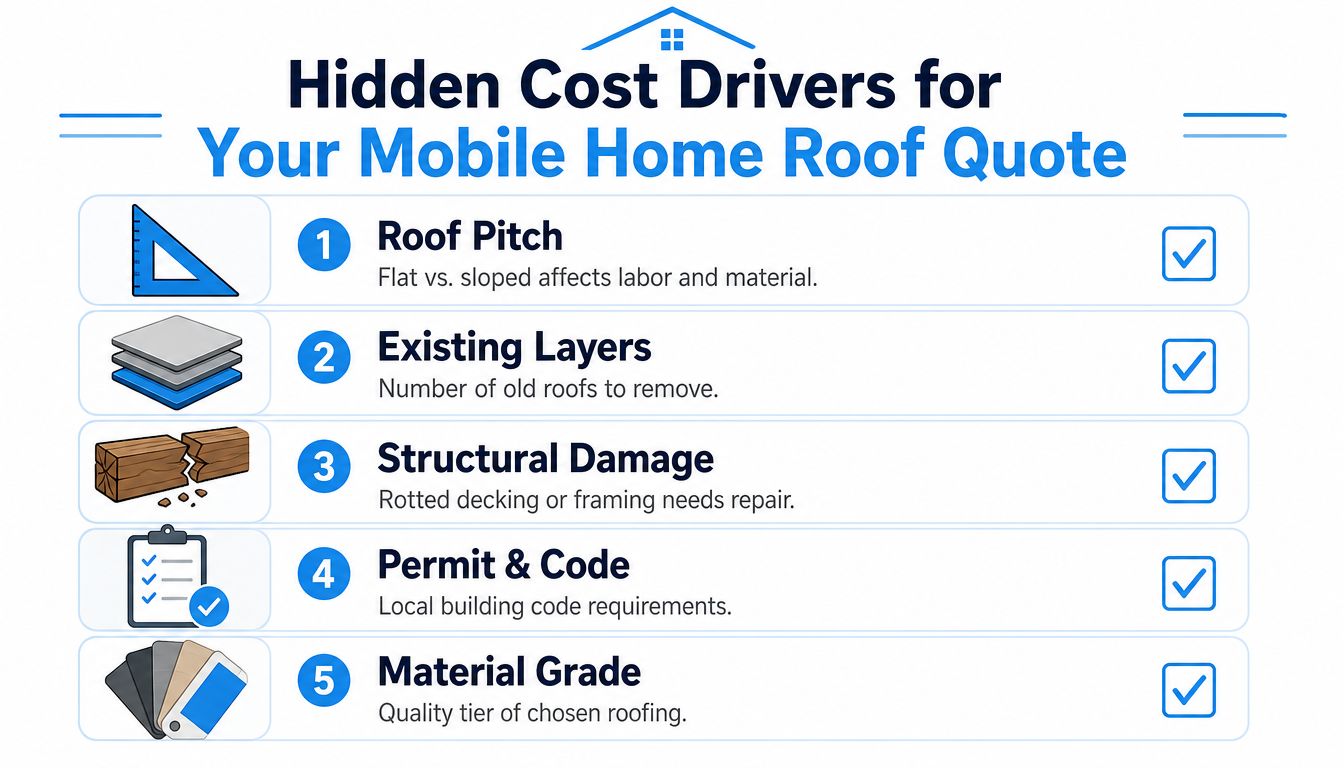
Hidden Cost Drivers That Change Your Quote
A mobile home with clear access and a sound roof deck may receive a straightforward quote. A similar home with restricted staging, soaked decking, and several old roof layers can cost far more. The roof's dimensions matter, but the hidden work often determines the final price.
Pitch and drainage
A low-slope roof can be easy to walk on, yet ponding water, membrane seams, and drainage transitions demand careful detailing. A steeper profile sheds water more effectively but may require added fall protection, access equipment, and material handling. Your estimate should identify the roof profile and explain how the selected system moves water away from the home.
Access around the home
Fences, trees, parked vehicles, narrow lots, and tight park layouts slow down every stage of the job. Crews may need to hand-carry panels, move debris farther, or protect neighboring structures during tear-off. Material delivery, equipment placement, and tie-down space can all raise labor costs.
Restricted access changes the quote before the first piece of roofing is removed.
Structural repairs
Soft spots, sagging areas, damaged decking, and compromised framing must be corrected before the waterproofing layer is installed. Do not accept “repair as needed” without a unit price, allowance, or approval process. Otherwise, concealed damage can turn into an open-ended change order.
Ask the contractor how damaged framing and decking will be documented before repairs begin.
Tear-off and disposal
Removing one old roof differs from removing multiple layers of membrane, rolled roofing, metal, or patch material. Disposal charges depend on debris volume and handling requirements, not only crew size. The estimate should state what will be removed, how debris will leave the property, and whether hauling and disposal are included.
Penetrations and flashing
Vents, HVAC equipment, skylights, plumbing stacks, edge metal, and the center seam are common leak points. Each transition needs compatible flashing, fasteners, sealants, or membrane detailing. A low bid that leaves these items out is incomplete, not cheaper.
Ask before signing: “What conditions would trigger a change order, and what price or approval process applies to each one?”
Use this mobile home roofing cost-driver explainer to compare the categories listed in your bids. For general home-maintenance questions while documenting the project, you can also find answers on Maya, then take specific roof concerns to your contractor.
This video shows why preparation and installation details affect roof performance:
A written estimate should list the roof area, selected system, preparation, tear-off, disposal, flashing, structural repair terms, permits where applicable, cleanup, and warranty. If those lines are missing, you are comparing assumptions rather than prices.
How to Choose the Right Roofing Contractor
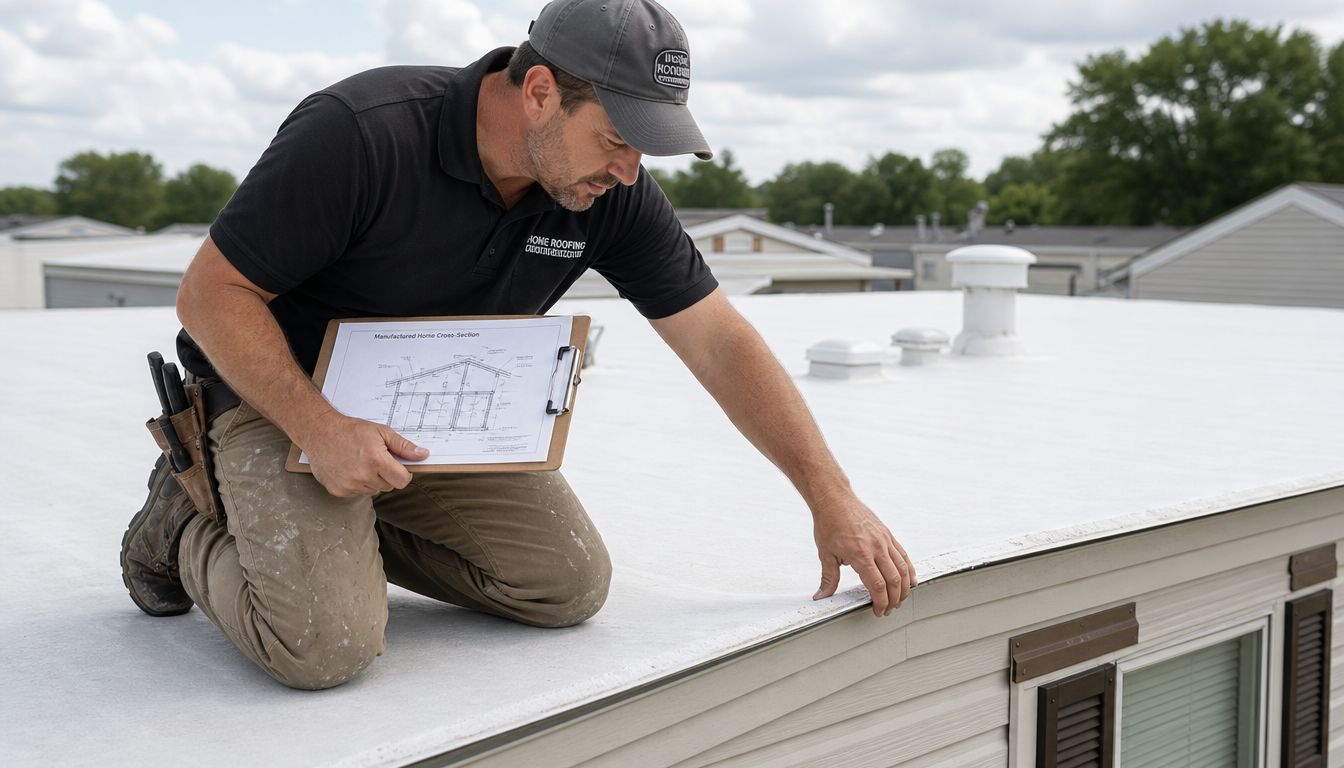
A mobile home roof isn't just a smaller version of a site-built roof. The contractor must understand low-slope membranes, lightweight framing, roof-over fastening, center seams, edge details, and the way access changes on manufactured-home lots.
Start with credentials and relevant work
Ask for proof of insurance and the contractor's applicable Texas credentials or registrations. Then ask for references from mobile home or manufactured-home roofing projects, not only conventional houses. A roofer may install shingles well and still lack the experience needed for a membrane roof-over or a roof with unusual structural limits.
You should also ask who pulls permits, who schedules inspections, and what documentation you'll receive at completion. Requirements can vary by jurisdiction and project scope, so the contractor should identify the applicable process rather than shrugging it off.
Read the estimate line by line
A useful bid separates labor, materials, preparation, removal, disposal, flashing, repairs, cleanup, and warranty terms. It should name the membrane, panel type, coating, or shingle system instead of saying “new roof” without specifications.
Watch for these warning signs:
- No written scope: The contractor won't explain what gets removed or installed.
- Full payment upfront: The payment schedule doesn't protect the homeowner as work progresses.
- No mobile-home references: The company can't show comparable work.
- Vague repair language: “Any repairs extra” appears without a process or pricing basis.
- Pressure to decide immediately: The contractor uses urgency instead of documenting roof conditions.
A helpful outside reference is the Hand Vetted Co. guide to roofers, particularly when you're building a shortlist. For a local company's approach to documentation and project controls, review Home Pro's quality assurance process and compare its level of detail with the other bids you receive.
The contractor should be able to explain the roof to you from the ground, in plain language, before asking for a deposit.
A design-build contractor can be useful when the roof replacement connects to siding, skirting, windows, or other exterior work. One coordinated scope can reduce scheduling conflicts, but you still need a roofing estimate that identifies the roof system and its installation requirements separately.
Life-Cycle Cost and Long-Term Value
A low invoice can turn into an expensive roof if it requires repeated patching, recoating, or early replacement before you sell. Compare the full cost of keeping the home dry, structurally sound, and marketable for as long as you plan to own it.
Use this starting formula:
Estimated life-cycle cost = initial installation + planned maintenance + likely repair or replacement work.
Ask the contractor what maintenance the system needs, which conditions shorten its service life, and whether future repairs can be completed without removing the entire assembly. A coating can suit an owner planning to sell or relocate. A metal system often makes more sense for someone staying in the home long term.
Match the system to East Texas conditions
East Texas heat, humidity, heavy rain, and severe storms test roof seams, fasteners, coatings, and drainage. Low-slope roofs need careful attention to ponding and membrane detailing. Reflective surfaces can reduce heat buildup, but installation quality still determines whether water stays out.
Your ownership horizon should guide the decision. If you expect to move soon, the highest-priced system may not return enough practical value. If you plan to stay, removing and replacing a short-term system later can erase its initial savings.
Published guidance places common material and installation pricing across systems at roughly $2.50 to $8.00 per square foot (material and pricing guidance). Use that figure to compare starting costs, not to predict total ownership expense. A cheaper coating may require more maintenance, while a longer-lasting metal roof may cost more upfront but reduce replacement work.

For resale, buyers respond better to a documented, professionally installed roof than to an unsupported promise of longevity. Keep the contract, material specifications, project photos, permits, inspection records, and warranty information. These records show what was installed and how the roof was maintained, instead of asking the next buyer to rely on a verbal assurance.
Once the ownership cost is clear, choose an installer who will document the roof system and the work required to protect it.
Your Pre-Project Checklist and Next Steps
Before requesting estimates, prepare the details that affect your quote. You do not need to climb onto the roof. Ground-level photos, interior pictures, and a clear leak description give a contractor safer, more useful information.
Prepare the property file
- Measure the footprint: Record the home's length and width, including additions or attached sections.
- Photograph damage: Capture ceiling stains, exterior edges, seams, vents, and areas where water collects.
- Check interior conditions: Note soft ceilings, damp insulation, musty odors, and stains that worsen after rain.
- Ask about roof history: Find out whether the home has had coating, roof-over work, patches, or replacement.
- Review site rules: Confirm park, HOA, lease, access, staging, and working-hour requirements.
Compare written proposals
Request multiple estimates with the same scope. Have each contractor separate repair, coating, roof-over, and full replacement when appropriate. Confirm whether the price includes disposal, flashing, cleanup, permits, structural repairs, warranty coverage, and payment milestones.
Ask about financing if the project cannot wait until you save the full amount. A free onsite estimate beats a phone range because the contractor can inspect pitch, access, roof layers, penetrations, and visible damage. In East Texas, schedule inspections before severe weather creates a rush.
Keep the contract, material specifications, project photos, permits, inspection records, and warranty paperwork. After installation, use this documented final walkthrough checklist to verify cleanup, flashing, edges, penetrations, and agreed repairs. Hold the final payment until the completed work matches the contract.
Home Pro's Remodeling & Repairs provides roofing installation and replacement, onsite consultations, free estimates, and financing options for homeowners across Tyler and East Texas. Visit Home Pro's Remodeling & Repairs to request a roof evaluation and project-specific plan for your mobile home.