
Your kitchen's too cramped, the roof's showing its age, or the addition plans keep getting pushed around because nobody can give you a straight answer. That's usually when Tyler homeowners start Googling contractors Tyler TX and get buried in directory listings, star ratings, and a dozen firms that all sound the same.
The problem isn't finding a contractor. Tyler has plenty of them, and the city's housing stock, population base, and regional economy support steady remodeling demand, especially in older homes and growing outlying communities. Problem is choosing a contractor who runs the job like a process, not a guess, because that's what separates a smooth remodel from a long string of delays, change orders, and frustration.
Table of Contents
- Why Choosing the Right Tyler Contractor Changes Everything
- What Design-Build Really Means for Your Project
- The Services a Full-Service Tyler Remodeler Should Cover
- The Four-Phase Workflow That Keeps a Remodel on Track
- What These Projects Look Like Across East Texas
- The Tyler Service Area and Why Local Reach Matters
- How to Vet a Tyler Contractor Before You Sign
- Requesting Your On-Site Estimate in Tyler
Why Choosing the Right Tyler Contractor Changes Everything
You stand in a 1970s Tyler kitchen that never quite worked. The island is in the wrong place, the cabinets are tired, and every time the family gathers, somebody gets bumped out of the way. Or the first hard rain after a storm turns a roof issue into a leak in the hallway ceiling, and now the repair isn't optional.
That's the moment people start comparing bids like they're comparing lumber prices. That's the wrong lens. A remodel lives or dies on coordination, not just cost, because the contractor decides how the work gets sequenced, how changes get handled, and whether the job keeps moving when one trade finishes and the next one needs to start.
Price is not the main risk
Two bids can land in the same general range and still create totally different outcomes. One contractor may be guessing at scope, while another has already walked through design, allowances, and scheduling with you before construction starts.
Practical rule: if the contractor can't explain how they'll control scope, you're not buying a remodel, you're buying surprises.
Tyler homeowners feel this most on projects that touch several trades at once. A kitchen upgrade, a bath refresh, or an addition isn't one task. It's carpentry, electrical, plumbing, drywall, finishes, and inspection coordination all stacked together. The more moving parts, the more valuable a contractor becomes as a manager instead of just a bidder.
That's why the search for contractors Tyler TX should start with process quality. Ask who owns the plan, who keeps the budget aligned to the plan, and who makes sure the work on the wall matches the work on paper. If the answer is vague, the project will be vague too.
What Design-Build Really Means for Your Project
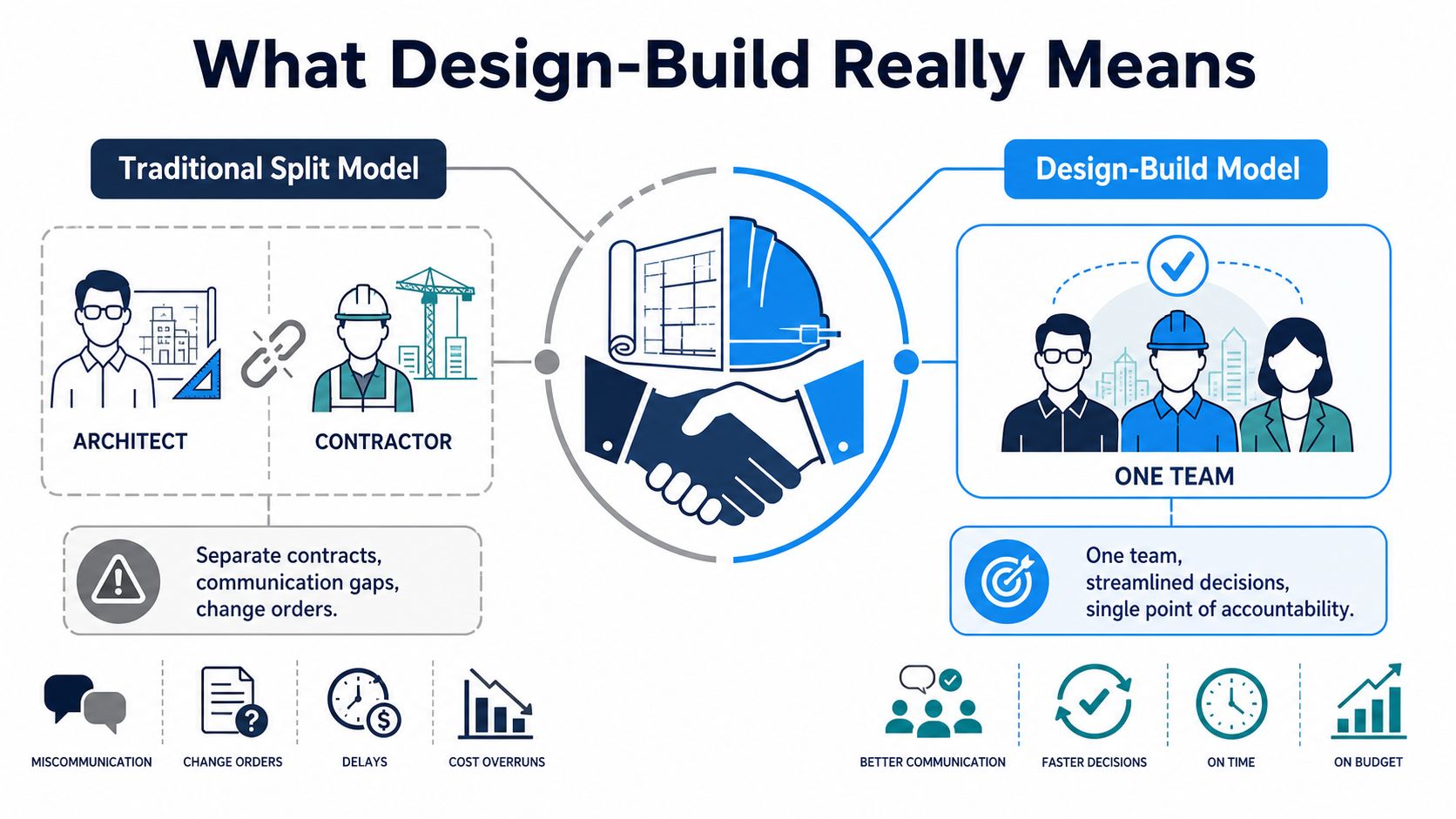
Most remodel headaches start before the first hammer swings. In the traditional split model, a homeowner hires one party to draw the plan and another party to build it, then hopes the bid matches the drawing. That sounds orderly until the builder comes back with a number that forces redesigns, substitutions, or delays.
One team, one budget conversation
Design-build fixes that gap by putting design and construction under one roof. The builder is involved while decisions are still adjustable, so the budget isn't an afterthought. On a kitchen remodel, that changes everything. If the cabinet layout pushes plumbing, framing, or electrical work out of place, you hear about it while you're choosing finishes, not after demolition.
That matters because remodels aren't won by pretty drawings. They're won by decisions that hold up in the field. A design-build team can say, in plain language, that this layout works, this one doesn't, and this material choice will cost more labor because it adds steps.
Why that matters in Tyler homes
Tyler has a lot of older housing, and older homes often hide framing quirks, outdated systems, and room layouts that don't match how families live now. Design-build helps because the same team that shapes the plan also has to live with the schedule and the production realities. No one gets to hand off a wish list and disappear.
If you want a contractor who can keep the scope and the budget aligned, look for a process that starts with target budget conversations and ends with a written build plan. That is how you avoid the classic remodel failure, the one where the drawing looked good but the estimate didn't.
The Services a Full-Service Tyler Remodeler Should Cover
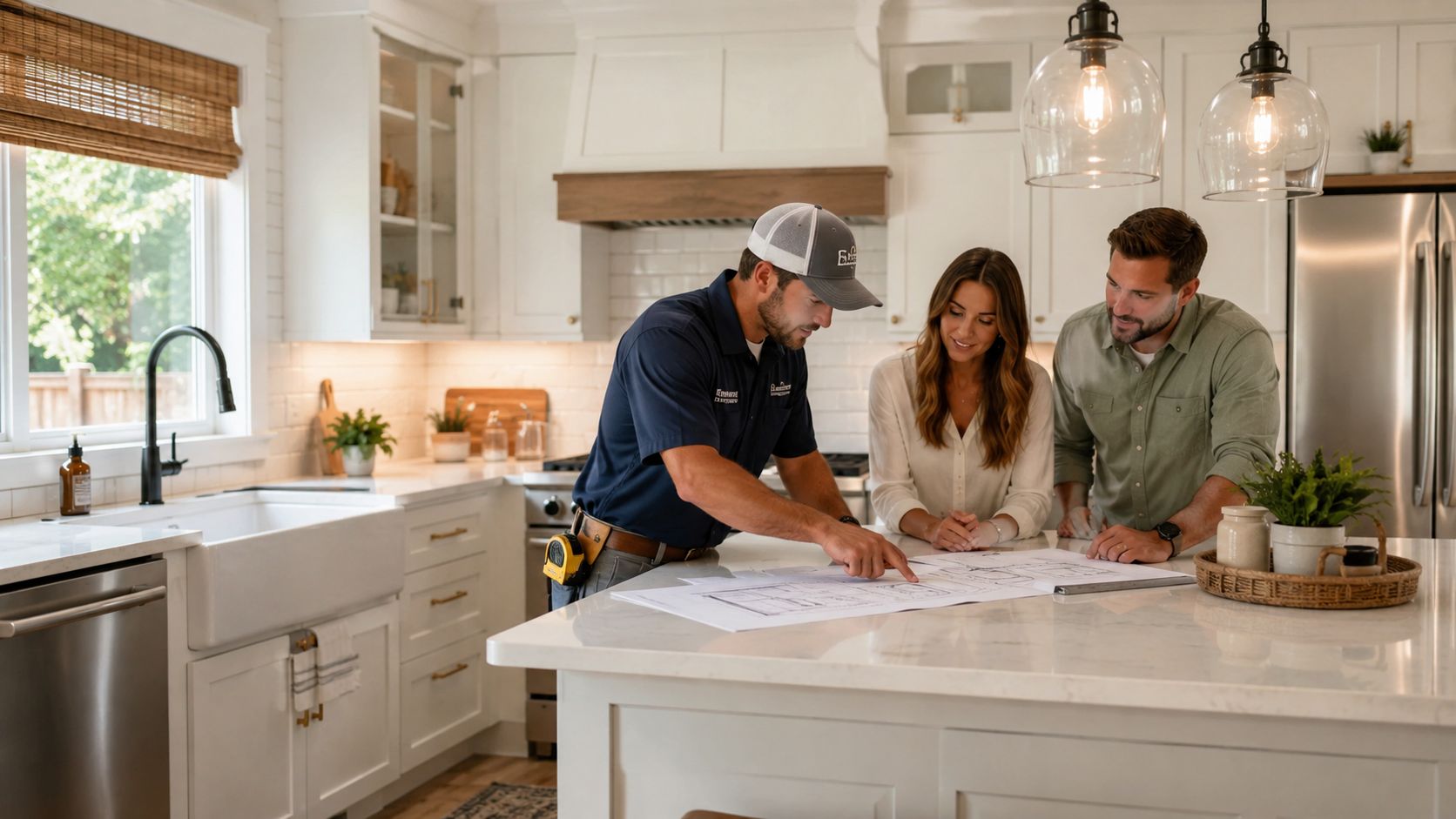
A true full-service remodeler doesn't just swap out tile and call it good. The work usually falls into three buckets, interior, exterior, and additions or outdoor living. If a contractor only wants one narrow type of job, that's fine, but don't mistake that for full-service capability.
Interior work should be more than cosmetic
Kitchen remodeling, bathroom remodeling, whole-house reconfigurations, drywall, trim, flooring, and carpentry all belong in the same operational lane. These are the jobs where layout, utilities, and finish work interact. If one crew can't coordinate those pieces, you'll feel it in every delay.
A contractor who handles interior reconfiguration well usually understands sequencing. That means rough framing happens before drywall, and drywall happens before finishes, not after someone discovers a missing detail at the wrong time. That sounds basic, but basic is exactly what keeps remodels from going sideways.
Exterior and envelope work need a different skill set
Roofing, siding, windows, and doors are not just appearance upgrades. They affect weather protection, comfort, and how the rest of the house performs. A contractor who regularly handles these pieces knows how one change affects another, especially when old materials have to meet new ones cleanly.
Exterior work punishes sloppy sequencing. If the contractor doesn't understand the envelope, the repair looks finished long before it actually is.
Additions, outdoor spaces, and specialty builds
Room additions, garages, fencing, patios, decks, outdoor kitchens, storage buildings, and barndominiums all require more than one trade. They need layout control, material coordination, and a contractor who can keep subs moving in the right order. Home Pro's Remodeling & Repairs is one example of a Tyler-area firm that handles design-build renovations, additions, roofing, exterior improvements, and selected new construction through a consultative process.
A contractor with that broader scope can move from one phase to the next without reinventing the wheel. That saves time and cuts down on the handoff gaps that often show up when homeowners hire five different specialists for one project.
The Four-Phase Workflow That Keeps a Remodel on Track
The best remodels feel planned because they are planned. A well-run Tyler contractor should be able to describe the job in phases, not in vague promises. If the workflow sounds improvised, the job probably is.
Phase one sets the target before the drawings start
The first meeting should lock in your goals, your rough scope, and your target budget. That order matters. If design starts before the budget is real, the project drifts toward wish-list thinking and away from what you can build.
Phase two turns choices into a buildable plan
Design and material selection come next. The contractor helps you narrow finishes, confirm layout decisions, and make sure the plan still holds together before construction begins. The important part is that selections are made against the budget, not in a vacuum.
Phase three puts the schedule on paper
The on-site consultation should end with finalized details and an estimated production schedule. That schedule doesn't need to be flashy. It needs to be real. A verbal promise that somebody will “get there soon” is not a plan, and a lot of friction disappears when everyone knows who is starting what and when.
A good contractor should also be comfortable talking through permit timing and job coordination. Tyler projects often touch municipal requirements, and larger additions especially benefit from a contractor who has already thought through the paperwork and sequence. If you're curious how that timing often plays out on bigger jobs, see how a home addition timeline is usually handled.
Phase four is construction plus closeout
Construction starts only after the work is aligned. Demo happens, buildout follows, inspections get scheduled, and then the final walkthrough handles punch list items. That last step matters because a project isn't complete when the tools leave, it's complete when the details are checked and the handoff is clean.
A contractor who can't explain handoffs between phases usually can't protect your timeline either.
The same logic is why written schedules matter on bigger jobs. Texas public construction reporting in the Tyler District tracks contract amount, amount earned to date, and percent complete, which reflects a production mindset that owners should expect in private work too, especially when the project spans multiple trades and stages. When progress is measured clearly, problems surface early instead of becoming expensive late.
What These Projects Look Like Across East Texas
A good workflow doesn't belong to one type of house. It stretches to fit the job. In Tyler, that usually means one of three patterns.
A 1970s Tyler kitchen that needs a real reset
Older Tyler homes often need more than new paint and fresh hardware. The layout may fight the family, the bath may feel cramped, and the rooms may need reconfiguration so the house works better day to day. A design-build contractor starts with the target budget, then shapes the layout and finishes around that number so the work stays grounded.
That approach is especially useful when the project touches several interior systems at once. A kitchen and bath refresh can quickly expose plumbing, electrical, and framing decisions that don't show up in a simple bid. If the contractor handles the whole sequence, you're less likely to get stuck mid-project waiting on the next specialist.
A larger-lot addition or barndominium build outside the city core
In places like Bullard or Chandler, the conversation often shifts from facelift to space. Families need a room addition, a garage conversion, or a new structure that supports storage, work, or extended living. Those jobs reward planning because they involve site layout, structure, utility tie-ins, and finish coordination all at once.
That is where a disciplined contractor earns the money. The owner wants usable square footage, not a pile of disconnected subcontracts. The contractor who can keep the scope aligned from the start is the one who usually delivers the cleaner finish.
An exterior or roofing refresh on an older East Texas home
Homes in Whitehouse, Lindale, and nearby communities often need envelope work before they need a flashy interior upgrade. Roofing, windows, doors, and siding affect how the house holds up through weather and age. If the exterior is compromised, cosmetic work inside doesn't solve the problem.
The same four-phase process still applies, just with a different emphasis. The plan starts with what the house needs structurally, then moves into materials and sequencing, then into construction, then into final closeout. That flexibility is the point. A serious remodeler doesn't force every job into one mold.
The Tyler Service Area and Why Local Reach Matters
Tyler is the hub, but the work doesn't stop at the city line. A contractor who regularly serves Lindale, Flint, Bullard, Whitehouse, Frankston, Chandler, Kilgore, Chapel Hill, Hideaway, Ben Wheeler, Gladewater, and Jacksonville already knows the driving patterns, the local expectations, and the practical realities of East Texas scheduling.
That local reach changes how quickly someone can show up, quote a job, and come back if something needs attention after completion. An out-of-area firm has to build a logistics plan every time it takes a call. A local team is already moving through the region.
Local advantage: if a contractor already works your part of East Texas every week, they usually quote faster and stand behind warranty work with less friction.
For homeowners, that means fewer excuses and better follow-through. It also means the contractor is more likely to know what neighborhoods and property types tend to throw at a job before the crew arrives. That kind of familiarity matters on remodels, additions, and exterior work, where small surprises can turn into big schedule problems if the team isn't nearby.
A contractor rooted in Tyler is also more likely to understand how the market behaves across city and county lines. That makes planning easier, especially when you need on-site consultation, quick revisions, or a second trip to verify details. In East Texas, proximity isn't a luxury, it's part of the service.
How to Vet a Tyler Contractor Before You Sign
The cheapest bid is often the most expensive mistake. If a contractor wins your job by underestimating scope, skipping planning, or glossing over communication, you'll pay for it later in change orders and stress. Vet the process first, then compare price.
Ask for proof, not promises
Confirm licensing and insurance before you discuss anything else. Then ask how they handle the target budget conversation before design starts, and ask to see a sample production schedule. If they can't produce those basics, they're not operating with enough discipline for a remodel that touches multiple trades.
You should also ask how they handle communication. Fast responses matter because remodels move through decisions quickly. If a contractor can't return calls or emails with consistency before the job starts, don't expect better once demolition begins.
Look for process signals in the estimate
A serious estimate should reflect scope alignment, not just a list of line items. Ask whether the contractor offers same-day quotes, free on-site estimates, financing options for larger work, and service support for installed products and workmanship. Those offerings don't guarantee quality by themselves, but they do tell you the company is set up to handle real projects instead of side jobs.
If you're comparing trades for exterior work, even something like a fence quote should show the same discipline. See how local homeowners typically shop for fence contractors if you want a sense of how process and scope should be handled on smaller but still important jobs.
Use this checklist before you sign
- Verify license and insurance. Make sure you're dealing with a contractor who can document coverage, not just talk about it.
- Review the workflow. Ask how design, budgeting, and scheduling connect before construction starts.
- Judge communication speed. Slow replies now usually mean slow replies later.
- Compare bids carefully. The lowest bid often leaves out something important, and that usually shows up as a change order.
The local contractor ecosystem in Tyler is broad enough to support specialization, and the Tyler Area Chamber's general-contractor directory alongside Procore's Tyler-associated contractor network show how much activity exists in the region. That density is useful for homeowners because it gives you options, but it also means you need to be selective about who gets your deposit.
Requesting Your On-Site Estimate in Tyler
Start with the basics. Have your property address, a rough scope, your target budget range, and your timeline ready before the first call. That gives the contractor enough context to decide whether the job needs a quick repair conversation or a full design-build planning meeting.
A productive first visit should leave you with three things. A clear scope. A clear number. A clear schedule. If you only get one of those, the meeting wasn't complete.
What a solid first meeting should produce
The contractor should walk the space, ask practical questions, and talk through how the work will unfold. For larger remodels and additions, you should expect an estimated production schedule and a written estimate aligned to the target budget. If the contractor also offers same-day quotes or free on-site estimates, use that to move the process forward, not to skip the planning conversation.
Bottom line: don't sign on excitement. Sign when the scope, budget, and schedule line up on paper.
If you're planning a deck or outdoor living project, budget conversations matter just as much as they do indoors. You can also review a deck-building cost estimate guide to get your questions organized before the visit. The point isn't to price-shop blindly, it's to show up prepared so the contractor can give you a real answer.
Homeowners who want a smoother path should work with a contractor who treats the first visit like a planning session, not a sales pitch. That's the standard you should expect in Tyler.
Home Pro's Remodeling & Repairs handles design-build renovations, additions, roofing, exterior improvements, and selected new construction across Tyler and East Texas. If you want a contractor who talks scope, budget, and schedule before the work starts, visit Home Pro's Remodeling & Repairs and request an on-site consultation.